
Canada’s immigration pullback is putting housing demand under scrutiny. Toronto’s condo market shows why prices, population growth and new construction need to be examined together.
Analysis | September 29, 2026
The Greater Toronto Area’s average home sale price fell below $1 million in August, while condominium prices remained under pressure following Canada’s move to reduce immigration targets.
For buyers who have spent years watching Toronto housing move beyond their budgets, the shift deserves attention. For condo owners and investors, it raises a harder question: how much demand can the market count on as population growth slows?
The connection matters. But the latest figures also challenge the idea that immigration cuts have sent the entire Toronto housing market into an accelerating crash.
GTA home prices fall below $1 million
The average GTA home sold for $993,410 in August 2026, down 2.7% from August 2025, according to the Toronto Regional Real Estate Board. Its composite benchmark price, which tracks a more consistent basket of housing characteristics, declined 4.5% year over year.
There is an important distinction between falling annual prices and a market deteriorating every month. After seasonal adjustment, August’s benchmark was essentially unchanged from July, while the average selling price edged higher. Source: TRREB’s August market release.
The average also reflects the mix of properties sold. A regional average below $1 million does not mean a typical detached house in every Toronto neighbourhood now costs less than that amount.
Toronto and GTA condos show the pressure
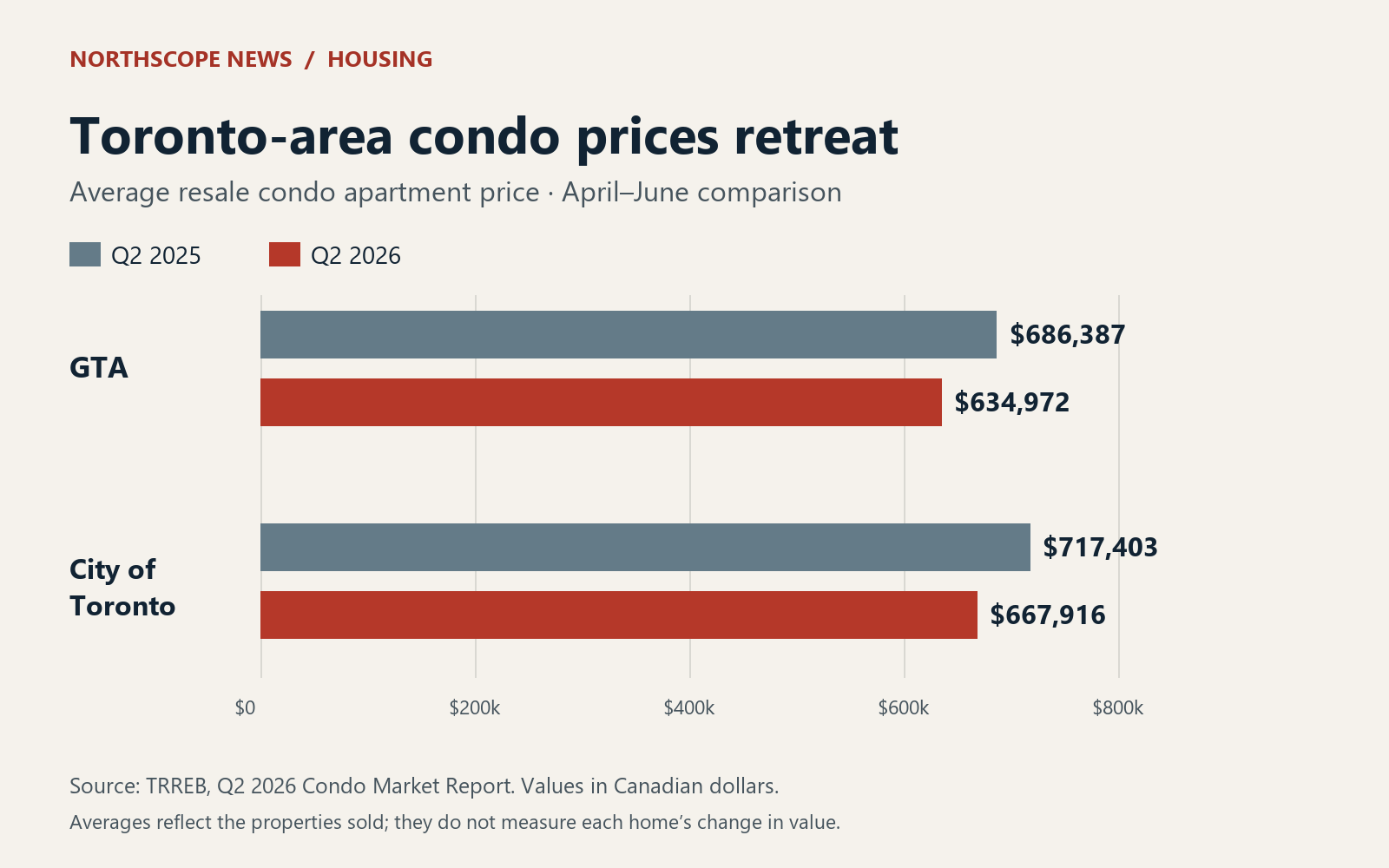
TRREB’s second-quarter condominium report provides a closer look at the segment:
| Average condo apartment sale price | April–June 2025 | April–June 2026 | Dollar change |
|---|---|---|---|
| Greater Toronto Area | $686,387 | $634,972 | −$51,415 |
| City of Toronto | $717,403 | $667,916 | −$49,487 |
The GTA average declined 7.5% year over year. However, condo sales increased 8.8%, while active listings at quarter-end fell 15.4%.
That combination describes a market where prices remained lower but buyers were returning and available inventory was shrinking. Source: TRREB’s Q2 condo report.
These quarterly figures cover a different period from August’s overall housing numbers. The dollar differences compare average transactions; they do not measure the loss on every individual condo.
Where Canada’s immigration cuts fit
Ottawa lowered its permanent resident admission target from 395,000 in 2025 to 380,000 in 2026. The target for new temporary worker and international student arrivals fell from 673,650 to 385,000—a reduction of approximately 43% in the planned intake. These are targets, not a count of actual arrivals or net population growth. Source: IRCC’s 2025 annual report.
Population estimates show a change already occurring. Statistics Canada reported that Ontario’s non-permanent resident population declined 1.5% during the second quarter of 2026. Ontario’s total population nevertheless increased 0.1% over the same period. Those preliminary estimates remain subject to revision. Source: Statistics Canada.
The clearest housing connection runs through rental demand. CMHC’s 2026 outlook identifies reduced international migration as a restraint on Ontario rental demand, alongside additional housing supply. Its Toronto outlook anticipates higher rental vacancies as new units meet weaker population growth. Source: CMHC’s Housing Market Outlook.
For an investor evaluating a condo, rental income helps determine what purchase price makes financial sense. Softer rents or longer vacancies can therefore weaken investor demand. That is a plausible economic mechanism; the reports do not calculate how much of Toronto’s price decline immigration changes caused.
Condo owners face competition from new supply
CMHC’s June rental update identified another source of pressure: newly completed apartments competing for tenants.
In Toronto and Vancouver, landlords reported competition from completed condominiums entering the rental market, including units that had struggled to find purchasers. Across major markets, increased supply and slower population growth helped bring down asking rents.
Existing tenants experienced a different picture: average rents paid on occupied units continued to rise. Lower advertised rents do not automatically reduce every renter’s monthly payment. Source: CMHC’s mid-year rental update.
Today’s condo weakness could restrict tomorrow’s supply
The downturn is also changing what gets built.
CMHC reported that construction began on just 156 condominium units in the City of Toronto during the first half of 2026. It linked weak condo construction to poor presales, subdued investor demand and substantial resale supply.
The agency also warned that declining condo completions will eventually reduce a source of rental housing, potentially renewing pressure on rents and vacancies. Source: CMHC’s fall housing supply report.
That creates competing forces for Toronto and the GTA: slower population growth can ease demand now, while fewer projects starting today can constrain supply later.
The next test is whether lower prices continue attracting buyers as listings are absorbed. Immigration, employment, borrowing costs and construction will all shape that outcome. The available evidence cannot assign the downturn to immigration cuts alone—or establish that another sharp fall is inevitable.
Related reading
Bank of Canada vs. Federal Reserve: who sets interest rates? · Why falling inflation does not mean prices are falling
Prepared with AI assistance from the public reports linked above. This analysis includes no on-scene reporting or independent interviews. Chart: NorthScope News, using TRREB’s Q2 2026 Condo Market Report.

