
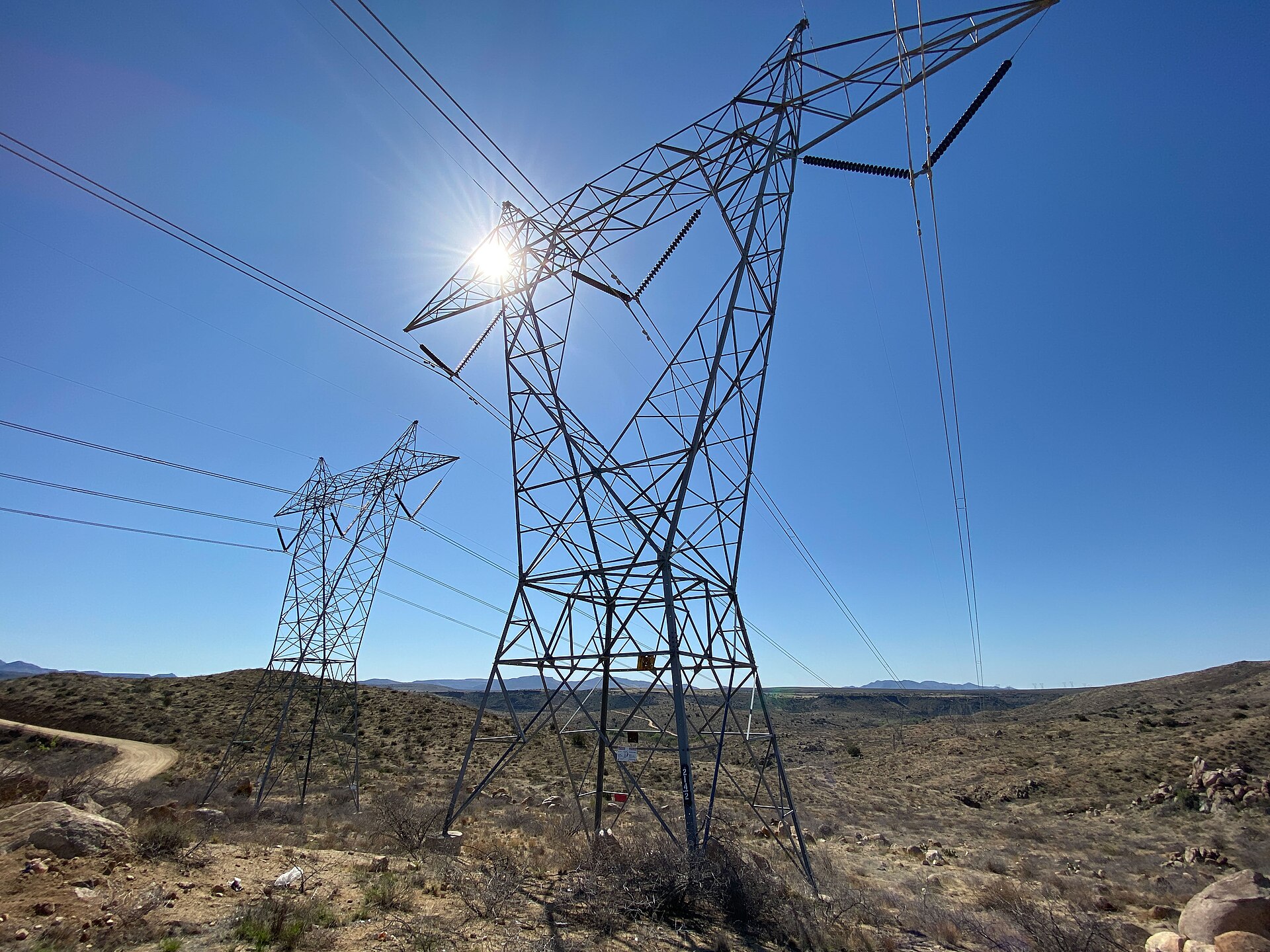
Transmission lines on public land in Arizona, April 2025. File photograph; no claim that these lines are among the announced SPARK projects. Photo: Chris Wonderly / Bureau of Land Management Arizona / Wikimedia Commons. Public domain. Responsive display; cropped in some story cards.
Event or reference date: September 24, 2026
The U.S. Department of Energy announced on September 24 that it intends to help fund 31 electricity-grid projects across 26 states through its SPARK initiative.
The planned package combines $1.9 billion in federal funding with $3.35 billion in recipient contributions, for a total of $5.25 billion. DOE expects the projects to increase the amount of electricity existing infrastructure can carry.
Upgrading existing corridors
The program anticipates rebuilding or replacing conductors along more than 1,500 miles of transmission lines and adding grid technologies across nearly 21,000 miles. DOE projects more than 23 gigawatts of additional capacity. Those figures describe expected outcomes, not completed upgrades.
The department says using existing rights-of-way can reduce the need for costly new transmission corridors. It presents the projects as a way to improve reliability and lower electricity costs, though the announcement does not establish a guaranteed saving for an individual household.
Selection comes before an award
The program’s published timetable places expected awards between October 2026 and January 2027. Selection, final funding and operating infrastructure are separate steps; the September announcement concerns the first of those milestones.
Sources and reporting method
DOE selection announcement, September 24
DOE SPARK program: funding, project scope and award timetable
Prepared with AI assistance from the public documents linked above. This article contains no on-scene reporting or independent interviews.


